Poor video content refers to videos that fail to capture attention, communicate a clear message, or provide value to viewers. Whether it is low-quality visuals, weak storytelling, or poor editing, poor video content can make even a great product or service look unprofessional.
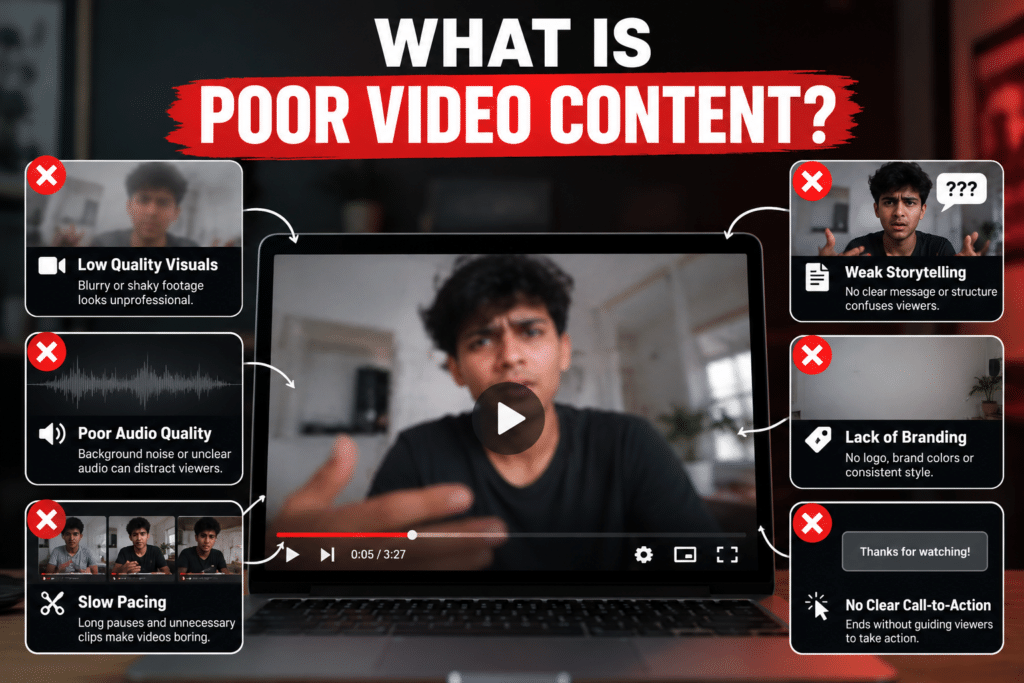
One of the biggest signs of poor video content is inconsistent quality. Blurry footage, shaky camera movements, and low-resolution visuals create a negative impression. Viewers often associate video quality with brand quality, meaning poor video content can reduce trust in your business.
Videos should tell a story that keeps viewers interested. When there is no clear structure or message, audiences quickly lose attention. often lacks a strong beginning, middle, and end, making it difficult for viewers to understand the purpose of the video.
Many creators focus on visuals while ignoring sound quality. Background noise, low volume, or unclear voiceovers are common examples of poor video content. Even if the visuals are excellent, poor audio can drive viewers away within seconds.
Your videos should reflect your brand identity. Videos without logos, brand colors, or consistent messaging often feel disconnected. This type of poor video content misses valuable opportunities to increase brand recognition and build customer trust.
Modern audiences have short attention spans. Long pauses, unnecessary scenes, and slow transitions can make videos feel dull. Poor video content often struggles to maintain viewer interest because it lacks professional editing techniques that keep content engaging.
Every video should guide viewers toward a specific action. Whether it is subscribing, contacting your business, or making a purchase, a strong call-to-action is essential. Poor content frequently ends without giving viewers any direction, resulting in missed opportunities.
Creating videos without understanding your audience is another major mistake. Poor video content often fails because it focuses on what the creator wants rather than what viewers need. Researching audience interests can significantly improve video performance.
Professional editing can transform poor video content into engaging, high-performing videos. Skilled editors improve pacing, remove distractions, enhance visuals, and create a more polished final product. Businesses that invest in professional editing are more likely to capture attention and retain viewers.
In addition, professional editors ensure that branding elements remain consistent throughout every video. This helps eliminate poor video content issues while creating a stronger and more memorable brand identity.
Poor video content can negatively impact engagement, audience retention, and brand reputation. From weak storytelling and poor audio to inconsistent quality and ineffective editing, these mistakes can prevent your videos from achieving their full potential. By identifying and fixing the causes of poor video content, businesses can create professional videos that attract viewers, build trust, and drive better results.
If your brand is struggling with poor video content, investing in professional video editing can be the key to improving performance and creating a lasting impression on your audience.